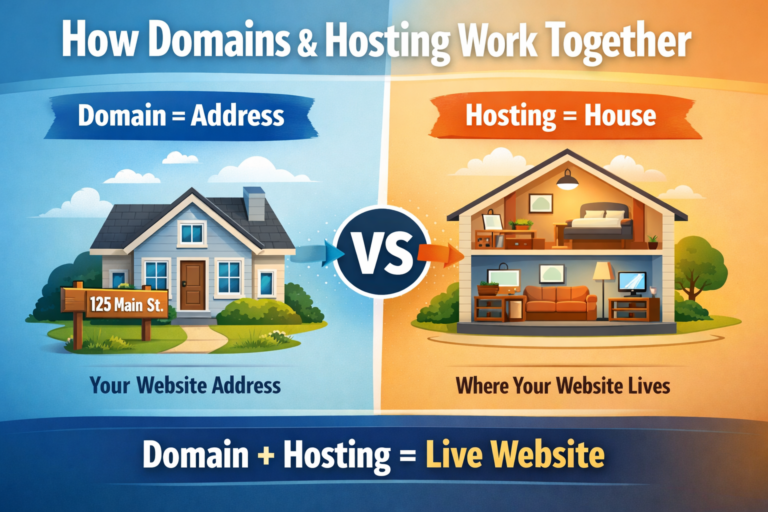
Choosing a domain name is one of the most important steps when starting a website, blog, online store, or business. Your domain name is your digital address on the internet. It’s what people type into their browser to find you.
A good domain name can help your website look professional, rank better on search engines, and be easier for customers to remember. A bad one can confuse visitors, hurt your branding, and make marketing harder.
If you are wondering how to choose the right domain name, don’t worry. This beginner-friendly guide will walk you through everything step by step.
By the end of this article, you’ll know:
- What makes a domain name good
- How to pick one that helps SEO
- Common mistakes to avoid
- How to check if your domain is available
- Tips professionals use when choosing domains
Let’s start.
What Is a Domain Name?
A domain name is the web address people use to visit your site.
Examples:
- yourbusiness.com
- myblog.net
- shoponline.org
Instead of remembering long numbers (IP addresses), the internet uses domain names so users can easily access websites.
Think of your domain name as your:
- Online shop signboard
- Digital business identity
- Website brand name
That’s why choosing the right one matters so much.
Why Your Domain Name Is Important
Many beginners rush this step, but your domain affects:
1. Your First Impression
Visitors often judge your professionalism by your web address. A clean, simple domain builds trust instantly.
2. Branding Power
Your domain becomes part of your brand name. If it’s memorable, people return easily.
3. Search Engine Visibility
While keywords in domains are not as powerful as before, a clear and relevant name can still help users understand what your site is about.
4. Marketing Simplicity
Short and easy names are easier to share on social media, business cards, and advertisements.
Step-by-Step on How to Choose a Domain Name
Step 1 — Keep It Short and Simple
The best domain names are:
- Easy to spell
- Easy to pronounce
- Easy to remember
Good examples:
- BrightBooks.com
- FreshFoods.com
Avoid:
- Very long phrases
- Complicated spelling
- Hard-to-pronounce words
If someone hears your domain once, they should be able to type it correctly.
Step 2 — Make It Easy to Type
Avoid:
- Double letters (like “pressstoreonline”)
- Unusual spellings
- Complex word combinations
If users struggle to type your domain, they may visit the wrong site instead.
Simple always wins.
Step 3 — Avoid Numbers and Hyphens
Numbers and hyphens confuse people.
Example:
best-shop-4-you.com
Users may type:
bestshopforyou.com
Or:
bestshop4you.com
This causes lost traffic.
Professional websites usually avoid these unless absolutely necessary.
Step 4 — Choose the Right Domain Extension
A domain extension is the ending, such as:
- .com
- .net
- .org
- .co
- .store
For global audiences:
.com is still the most trusted and recognized
If .com is unavailable, alternatives like .net or .co can work.
For country targeting:
- .uk → United Kingdom
- .ca → Canada
- .ng → Nigeria
But for international businesses, .com is usually safest.
Step 5 — Include a Relevant Word (If Natural)
Adding a relevant word can help users instantly understand your site.
Examples:
- TravelWithAnna.com
- HealthyMealGuide.com
But don’t force keywords.
Bad example:
best-cheap-top-seo-blog-site-online.com
This looks spammy and untrustworthy.
Natural branding is better than stuffing keywords.
Step 6 — Think Long-Term
Choose a name that can grow with your business.
Example mistake:
LagosPhoneRepairs.com
What if later you expand worldwide?
Better:
SmartPhoneFix.com
Pick something flexible for the future.
Step 7 — Check Social Media Availability
Before buying your domain, check if the same name is available on:
- YouTube
- TikTok
Using the same name everywhere strengthens your brand identity.
Step 8 — Check Trademark Issues
Make sure your domain name doesn’t copy an existing brand.
Avoid using famous company names or similar spellings.
This prevents legal issues and protects your credibility.
Step 9 — Test It Before Buying
Ask yourself:
- Can someone remember it after hearing once?
- Can a child spell it?
- Does it sound trustworthy?
- Does it match my business idea?
If the answer is yes, you likely have a strong domain.
Common Domain Name Mistakes to Avoid
- Choosing Extremely Long Names: Long domains are hard to remember and easy to mistype.
- Copying Big Brand Names: Never choose something similar to major companies. Example: amaz0nshop.com. This can cause legal problems.
- Following Trends Only: Trendy words may become outdated. Choose something timeless instead.
- Ignoring Pronunciation: If people cannot say your domain clearly, they may forget it.
Should Your Domain Match Your Business Name?
Not always, but it’s usually recommended. If your business is called “Blue Ocean Marketing”, Then, BlueOceanMarketing.com is ideal.
If that’s unavailable, you can shorten to BlueOceanMkt.com or add a word like BlueOceanDigital.com. Consistency builds trust.
How Professionals Brainstorm Domain Names
Here is a simple method experts use:
- Write your main business idea
- List important keywords
- Add brand-style words like:
- hub
- studio
- digital
- world
- guide
- solutions
Then combine naturally. Example: SEO + guide → SEOGuideHub.com
Keep trying until something feels right.
How to Check If a Domain Name Is Available
To check availability:
- Go to Namecheap or truehost domain registrar website
- Enter your desired domain
- See if it is available
- If taken, try small variations
Register immediately once you find a good one. Good domains sell quickly.
How Much Should a Domain Cost?
Typical yearly prices:
- Standard domains → $8 to $15 per year
- Premium domains → can be expensive
Avoid overpaying unless the name is extremely valuable for branding.
Most beginners should start with a normal-priced domain.
Final Tips for Choosing the Perfect Domain Name
- Keep it short
- Make it memorable
- Choose .com if possible
- Avoid numbers and hyphens
- Think long-term
- Keep branding consistent
- Check availability early
If you follow these rules, you will already be ahead of many beginners.
Conclusion
Choosing the right domain name is not about luck. It’s about clarity, simplicity, and future planning.
Your domain becomes your online identity, your brand, and your digital home. Taking time to pick the right one now saves you from rebranding problems later.
Whether you’re starting a blog, launching an online business, or building a professional website, a strong domain name gives you a powerful foundation for success.
Start simple, think long-term, and choose wisely.